Study visits to Lower Silasian, Poland, News published on PGI's website
Optimization of Shallow Geothermal Energy Resources for Green Transition (OptiSGE)
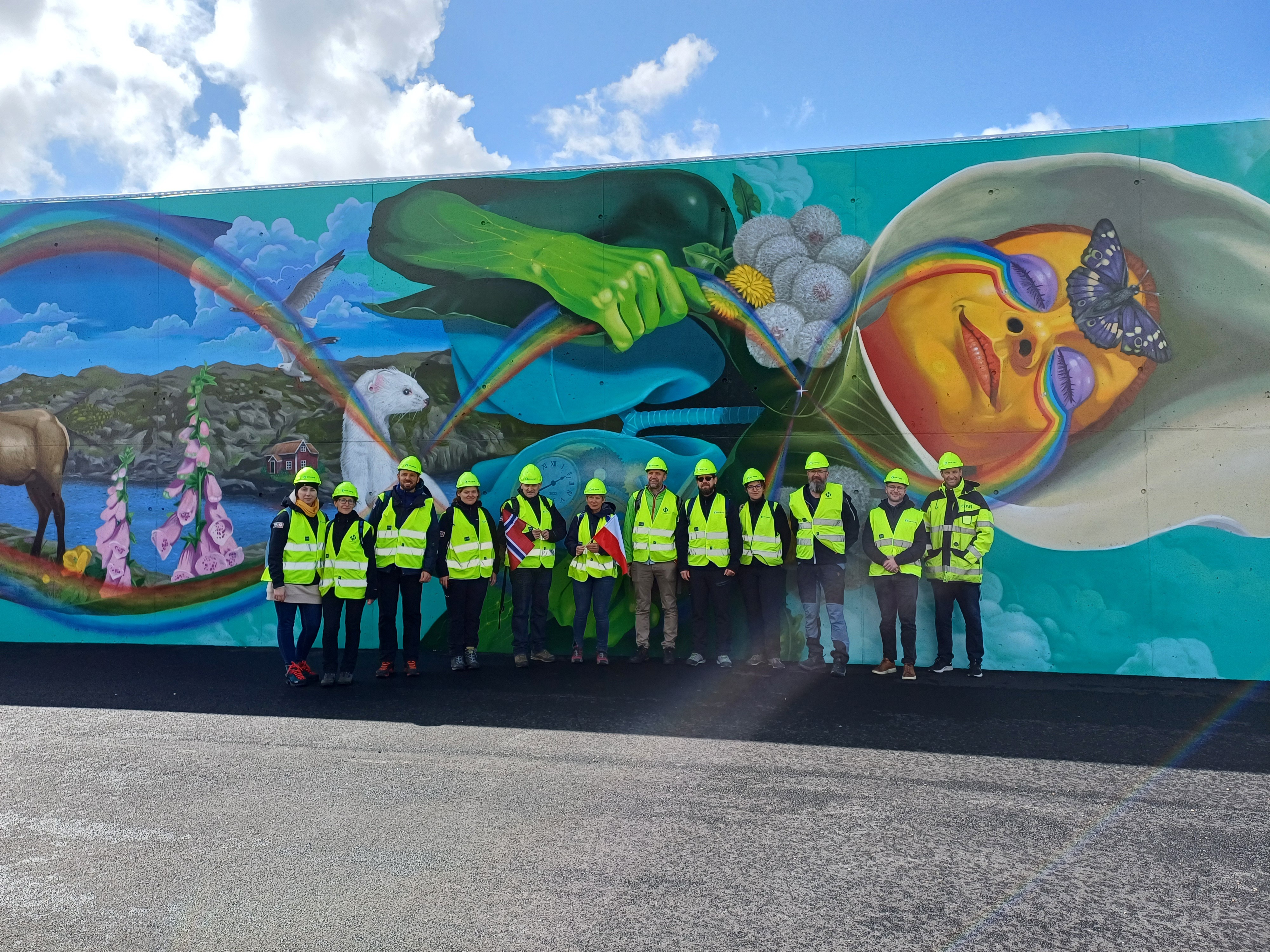
Photo PGI from Øygarden Energy Park
Project Facts
Status
CONCLUDED
Duration
01.09.23 - 31.08.24
Location
Bergen
Total Budget
2.780.000 NOK
Coordinating Institution
Polish Geological Institute (PGI)
Funding
EEA - The Agreement on the European Economic Area
A 2 Exchange of knowledge and experience: Study visits to Poland, November 2023
A 2 Exchange of knowledge and experience: Study visits to Bergen Norway, June 2024
June 4 Morning session project meeting
- GSHP experiences in Norway, Kirsti Midttømme, NORCE
- Fiber optic sensing technologies” – Peter Thomas, NORCE
- Hydrogeology in Norway, Eivind Bastesen NORCE and Ruden
- Experience with DTS for monitoring of geothermal wells and BHEs” – Willhelm Mazzotti Pallard, Bengt Dahlgren
- Bømoen case multi – use of groundwater aquifer” – Christian Rekve Bryn, Cowi,
- Temperature logging in the selected boreholes in SW Poland: DTS vs. manual measurement. Results of the OptiSGE project” – Maciej Kłonowski, PGI-NRI
June 4 Afternon session, site visit GSHP installation at Nygårdsporten
June 5 Site visits Bergen Area
- Øygarden Energy park
- Sweco office building, Fantoft
- Drilling site Vestnorsk brunnboring, Lothegaten, Bergen

Source:
Photo PGI
Site visits Øygarden Energy Park and drilling site in Bergen
A 3 Capacity building: workshop on shallow geothermal activities, optimisation and best use of resources Bergen June 6
The hybrid workshop was arranged in Bergen June 6, 2024. 51 online and 14 in person participanted at the workshop.
Agenda:
a) Analytic and numerical tools for ground source energy assessments
- Shallow geothermal potential mapping at PGI-NRI. Tools and workflows for effective thermal conductivity estimation (NumPY, ArcGIS Pro geoprocessing - Model Builder) – Grzegorz Ryżyński and Mateusz Żeruń, PGI-NRI
- Simulations tools – Karoline Kvalsvik, NORCE, NTNU.
b) Integrated mapping of energy requirements and geologic knowledge into optimal tailored system design.
- Feasibilty study for GSHP technology implementation for WSB Chomiczówka Housing District in Warsaw. Case study of shallow geothermal potential demand vs. capacity analysis” – Marta Szlasa and Grzegorz Ryżyński, PGI-NRI
- Integrated mapping of energy requirements and geologic knowledge into optimal tailored system design in Norway” – Randi K. Ramstad, NTNU.
- Analytical approach to energy supply from GHSH. Examples from Poland” – Jarosław Ozimek, DPS Sp. z o.o., PORT PC
c) Best practices of distributed temperature sensing for monitoring.
- Experience with DTS for monitoring of geothermal wells and BHEs” – Teppo Arola, GTK Geological Survey of Finland.
- Distributed temperature sensing in monitoring of borehole thermal energy storage at Aalto University Metrocomplex site” – Sami Vallin, GTK Geological Survey of Finland.
- DTS examples” – Karoline Kvalsvik

Publikasjoner i NVA
Temperature Logging in Selected Geological Boreholes: DTS vs. Manual Profiling. Preliminary Results of the OptiSGE Project – Kłonowski, Maciej; Brytan, Pawel; Krzonkalla, Anna; Ładocha, Agnieszka; Maćko, A; Midttømme, Kirsti; Nermoen, Anders; Pratkowiecka, Weronika; Sergiel, W; Thomas, James, Peter; Wyrwalska, U; Zawistowski, Karol; Żuk, P. 2024, EAGE Geotech 2024 Forth Workshop on Distributed Fibre Optic Sensing. Norges teknisk-naturvitenskapelige universitet, NORCE Research AS.
Hydrogeology in Norway – Bastesen, Eivind. 2024, Optimization of Shallow Geothermal Energy Resources for Green Transition OptiSGE open project meeting . NORCE Research AS.
GSHP experiences in Norway – Midttømme, Kirsti. 2024, Optimization of Shallow Geothermal Energy Resources for Green Transition OptiSGE open poject meeting . NORCE Research AS.
Se alle
