Go straight to content
<
<
Dokken – A Green New Urban District in the Making

Energy systems

Dokken – A Green New Urban District in the Making

Dokken ny Eier Bergen kommuna

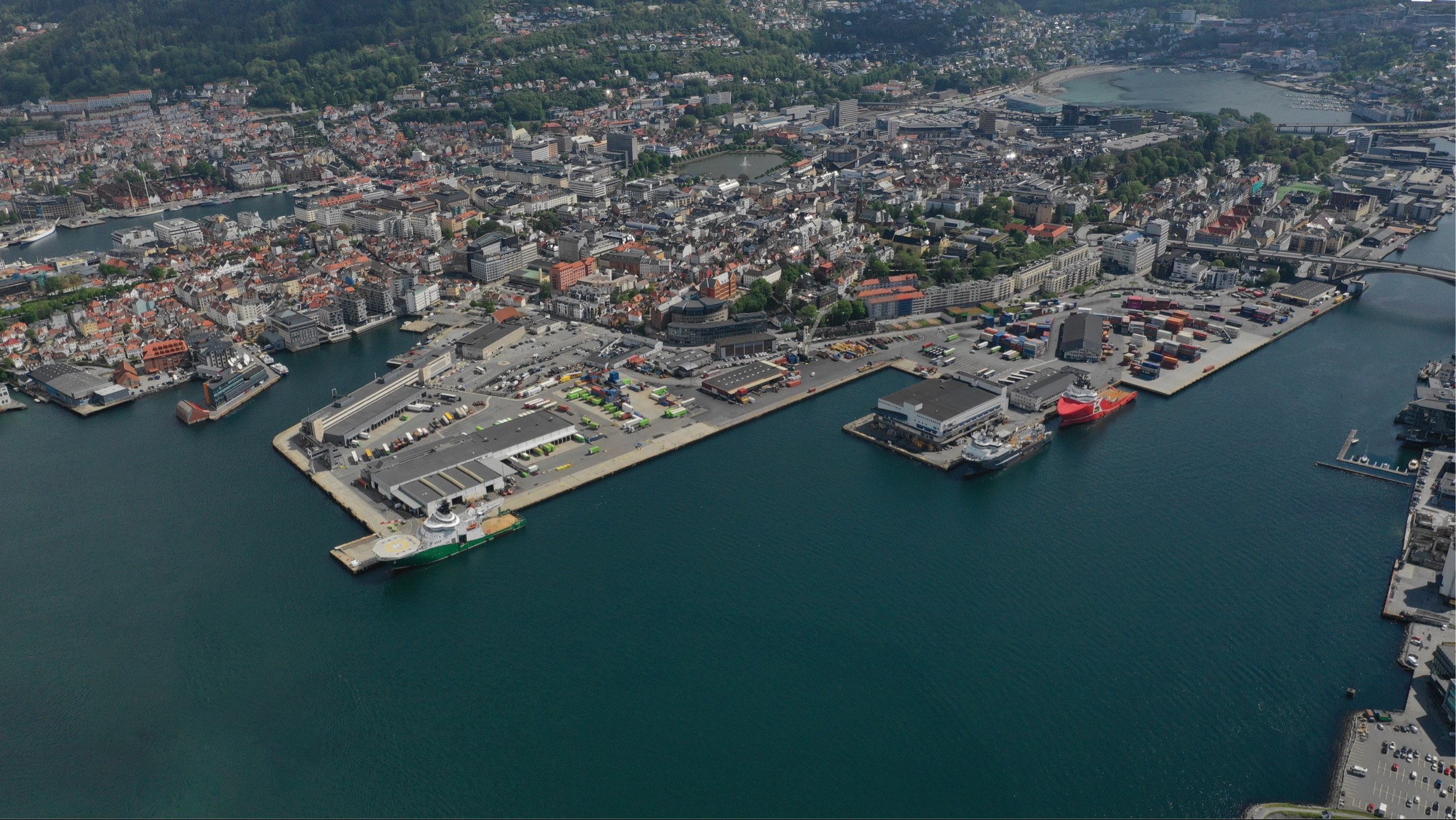
The Dokken area in Bergen is a pilot in ELEXIA, a EUR 100 million EU Horizon Europe project led by NORCE, focusing on identifying solutions for smart energy use. Photo: City of Bergen.

News

Published: 19.01.2026
Oppdatert: 20.01.2026

Gunn Janne Myrseth
Rune Rolvsjord

Researchers, experts and the City of Bergen are one step closer to the vision. Tools for building infrastructure for energy, water, and wastewater are now being tested.

– A milestone. I have waited three years for this moment, says Laura Ve.

Laura Ve, project manager for Dokken Utvikling, welcomes us to Dokken Development’s offices at Domkirkegaten 4.

Dokken Utvikling is a major urban renewal project transforming the former port area of Dokken in Bergen, Norway, into a sustainable, mixed-use city district with housing, businesses, culture, recreation, and a focus on marine research

In their office, the model of what could become Bergen’s future new urban district is finally up and running.

Researchers and developers from the ELEXIA project are developing next-generation tools for the planning and operation of local energy systems.

Through life-cycle analysis, interoperability, and cybersecurity ELEXIA aims to contribute to smarter and safer energy infrastructure in European cities, industrial parks and energy communities. Today marks the first test round.

Elexia Dokken 5413
Dokken is set to become a vibrant and sustainable part of the city, offering a wide range of opportunities in housing, business, services, culture, and recreation. Laura Ve from Dokken Utvikling presents the model of the new district in Bergen. Photo: Rune Rolvsjord, NORCE.

The ambition is zero emissions

– What is unique here is that the client is so clear about the zero-emissions goal. Often, such a goal is set without a clear rationale or meaning behind it. That is not the case here. Dokken Utvikling is serious about its ambitions for a zero-emissions system for energy, water, and wastewater, says Per F. Jørgensen from Vill Energi.

Jørgensen is the project manager, on behalf of Asplan Viak, for the planning work for Dokken Utvikling. He is one of those gathered today in Domkirkegaten to test the SpineOpt tool from VTT and the ERMSS tool from NORCE against the Dokken case. ERMSS stands for Energy Risk Management and Security of Supply.

Dokken in Bergen is one of four pilots in ELEXIA, a EUR 100 million EU Horizon Europe project led by NORCE, focusing on solutions for smart energy use.

Elexia Dokken 5524
Petter Nilsen and Per F. Jørgensen from Vill Energi are participating in the planning work for Dokken Utvikling and hope that the tool can help them size the solutions. Photo: Rune Rolvsjord, NORCE.

Testing the customised tools

– Our tool will be used to ensure safety and robustness in the planning and operation of the energy systems for the new Dokken. All values can be entered, and new values will come out. We hope it will be a useful tool for anticipating and focusing on vulnerabilities in energy networks—important and valuable both for planners and for assessing future scenarios related to Dokken, says Eric Ford, NORCE expert, with a new tool in his briefcase.
– Hopefully, we are offering something new, as we have a new approach that allows us to deliver both a project and a tool that can meet these needs. We examine whether there is sufficient energy for future scenarios, and we also consider unplanned events, such as disruptions in parts of the network, and how these might affect end users, Ford continues, adding:
– The tool that NORCE has now developed can also be used elsewhere, not only here in Bergen. We started with Dokken because it is both the closest and perhaps the most relevant initially for the application area, but there is clearly great potential here. With the approach we have chosen, I believe it can be applied in many places, including the other pilots in ELEXIA.
Elexia Dokken 5519
Jussi Ikäheimo (VTT), Vidar Yttersian (Asplan Viak), Eric Patrick Ford (NORCE), Roy Sande (Asplan Viak), and Laura Ve (Dokken Utvikling) are testing the tools from ELEXIA. Photo: Rune Rolvsjord, NORCE.

Dokken Utvikling receives support from both Vill Energi and Asplan Viak to test the tool from NORCE as well as a tool from VTT called SpineOpt. SpineOpt is both an operational and a planning tool for managing energy use. The same SpineOpt tool is also used by the ELEXIA project in their pilot in Denmark, in Høje-Taastrup.

SpineOpt is an already established and well-tested planning tool designed for the analysis and testing of energy needs in larger units, such as a new district.

As project manager Per F. Jørgensen at Vill Energi puts it, the tools are intended to ensure that Dokken Development achieves its objectives:

– Zero-emissions systems for energy, water, and wastewater. A unique and highly groundbreaking project that we hope will become a model for other European urban districts and projects. I will be leading the work toward zero emissions and the design of the infrastructure to reach that goal. I am very keen to see the tools developed through ELEXIA, how practical they are, and what benefits we can gain from them.
Elexia dokken 5503
Photo: Rune Rolvsjord, NORCE.

Project manager Per F. Jørgensen from Vill Energi, who leads the planning work for Dokken Development, hopes that SpineOpt and NORCE’s ERMSS will support several needs:

– One is to identify cost- and climate-efficient energy systems, but we also want to examine the flexibility of the energy system so that we can reduce peak loads and thus dimension the installations themselves. In other words, so that in the future we do not always design for maximum demand, but instead make the facilities flexible and smart, and see how we can shift energy use, achieve a theoretical maximum, move peak loads, accumulate usage, and explore new opportunities.

Jørgensen also sees several additional effects from the new tools and planning concepts:

– It is also exciting in terms of security of supply. What we are doing here with Dokken—the future Dokken—and the energy thinking from ELEXIA is unique. We are making use of the resources we have locally. In this way, the City of Bergen is at the forefront internationally; it is very forward-looking. We are not only looking at energy as such, but also linking the entire infrastructure lifecycle for energy to water and wastewater as well, Jørgensen concludes.

What kind of expertise do NORCE and the ELEXIA project bring to the development of these new tools?

– We come from a risk and safety background, with substantial experience in modeling uncertainty and using quantitative risk analyses across a wide range of application areas. We have worked extensively with oil and gas production, and now it is exciting to further develop the energy domain toward energy security and security of supply. The overall picture is somewhat new to us, but we are engaging in an exciting learning process by testing this here today, Ford concludes.

Contact

Peter Breuhaus
Peter Breuhaus

Sjefsforsker

Want to learn more about ELEXIA tools?